
For Professionals - The Referrals Process
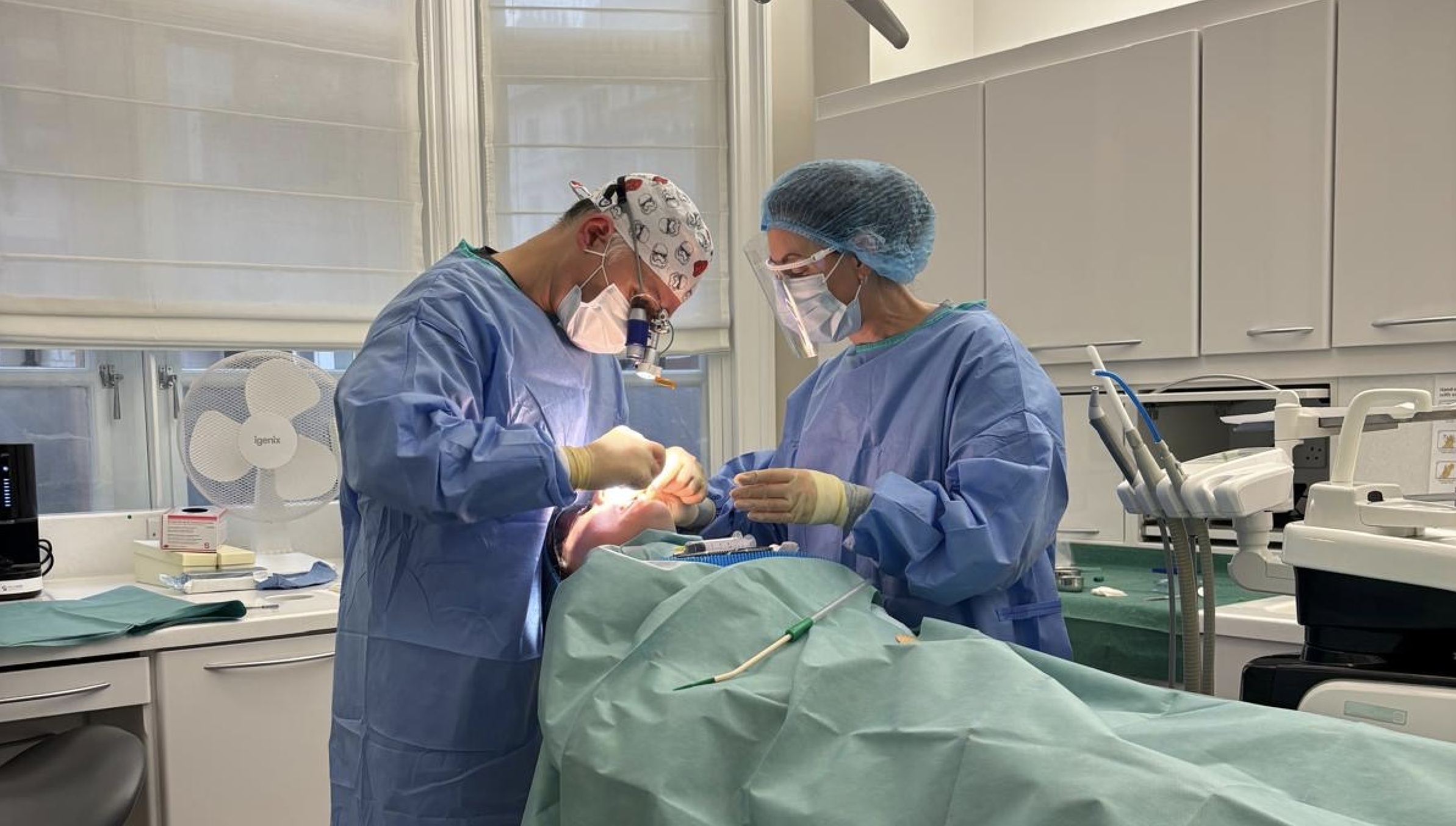
Referring a Complex Patient Case: A Trusted Specialist Pathway for Dentists and Surgeons
By Dr. Nikolas Vourakis
There are cases that sit comfortably within a practice workflow, and then there are cases that don’t.
Most experienced clinicians will eventually face a patient whose needs go beyond routine treatment planning: failed implants, advanced bone loss, soft tissue compromise, repeated complications, full-arch instability, or a restorative problem that has become surgically complex. These are not “simple re-treatments.” They are often high-stakes cases involving function, aesthetics, biology, confidence, and trust.
When that happens, referring is not a step back. It is often the most responsible and clinically sophisticated step forward.
I work with dentists, implant clinicians, and oral surgeons across the UK and internationally who need specialist support for precisely these situations - whether that means full case takeover, surgical intervention within a defined scope, or collaborative planning for a difficult case.
Why complex referrals are different
A complex referral is rarely just about “doing a procedure.” It usually involves a chain of issues that need careful diagnosis and sequencing.
A patient may present with implant failure, but the true problem may also involve bone deficiency, soft tissue insufficiency, infection history, prosthetic instability, occlusal overload, or previous treatment decisions that now need to be revised in a structured way. In many cases, the patient is also anxious, frustrated, and losing confidence after being through multiple appointments or failed outcomes.
This is why I approach referrals with a restorative-surgical mindset: diagnosis first, planning second, execution third - always with long-term stability and patient confidence in mind.
The types of cases I am commonly asked to manage
Referrals to me often involve cases that require advanced planning, specialist surgical execution, and clear communication throughout. These include:
Failed implant revision and implant complications
Full-arch rehabilitation and complex implant-supported restorations
Major and minor bone augmentation
Sinus elevation / sinus floor augmentation
Soft tissue reconstruction and recession-related challenges
Peri-implant soft tissue and regenerative concerns
Complex restorative surgery where multiple disciplines overlap
If a case feels high-risk, has already failed elsewhere, or is difficult to stabilise predictably, that is often exactly where a specialist referral adds the most value.
What referring clinicians often worry about (and rightly so)
I understand the hesitation that can come with referring a valued patient. In reality, most clinicians are not worried about the referral itself - they are worried about what happens next.
You may be asking:
Will my patient be looked after properly?
Will I be kept informed?
Will the scope remain clear?
Will the patient be returned to my care once the specialist phase is complete?
Will the communication be efficient, professional, and clinically useful?
These are all reasonable concerns, and they should be addressed before a referral is made.
My referral pathway is built around exactly that: clarity, transparency, and continuity.
How I work with referring clinicians
When you refer a patient to me, the aim is not just to treat the problem - it is to support your patient journey and protect the trust you have already built.
I prioritise:
Prompt triage and patient contact
Complex cases often come with urgency, anxiety, or ongoing complications. My team and I aim to respond efficiently so the patient feels supported quickly.
Clear communication with the referring clinician
You should not have to chase updates. I provide structured communication around assessment, proposed treatment, progress, and outcomes.
Defined scope of treatment
I only provide the specialist care required for the referred issue unless otherwise agreed. This keeps the process clinically focused and professionally respectful.
Seamless return to your practice
Once the specialist phase is complete, the patient is returned to your care with appropriate documentation and a clear summary, so continuity is maintained.
This is the standard I would expect if I were referring one of my own patients - and it is the standard I provide.
Why some cases need a different level of planning
Complex implant and restorative referrals often fail when treatment is approached as a single procedure rather than a staged process.
For example, a failed implant case may require:
diagnostic reassessment, removal, infection control, hard tissue regeneration, soft tissue optimisation, healing, re-evaluation, and then carefully sequenced implant reconstruction. The same applies to compromised full-arch cases, where the surgical, prosthetic, and biological variables need to be managed together - not in isolation.
My approach uses digital planning and guided workflows where appropriate, alongside advanced regenerative and surgical techniques, to improve predictability in demanding scenarios. This is particularly important where anatomy is compromised, bone volume is limited, or previous treatment has left the case more complex than it first appears.
Referral is also a patient care decision
Many patients who come through referral are not just clinically complex - they are emotionally exhausted.
Some have been through repeated treatment. Some have experienced complications. Some are embarrassed. Some have lost trust in dentistry altogether. By the time they are referred, they may need as much reassurance and clarity as they need surgery.
That is why I place real emphasis on communication, consent, expectation management, and a calm, respectful clinical experience alongside the technical treatment itself. A successful outcome is not only about radiographs and prosthetics - it is also about helping the patient feel that they are finally on the right path.
If you’re unsure whether to refer, start with a conversation
Not every difficult case needs an immediate handover. Sometimes what is needed first is an experienced second opinion, treatment planning input, or guidance on options.
If you are dealing with a complex implant problem, a regenerative challenge, a full-arch case with multiple variables, or a patient whose treatment has become difficult to stabilise, I’m happy to review the situation and advise on the most appropriate next step.
In some cases that will be a referral for specialist treatment. In others, it may be mentorship, discussion, or collaborative support.
How to refer a patient to me
If you would like to refer a patient, you can do so via my dedicated professional referral pages:
If you’d like to understand more about my clinical approach before referring, you can also review:
A final word to colleagues
Referring a complex case is not an admission of limitation - it is a mark of clinical judgement.
The best outcomes often come from knowing when a patient needs a different level of expertise, a different surgical environment, or a more advanced treatment pathway. If you have a case that feels beyond the scope of general practice, has become unpredictable, or simply needs specialist intervention, I am here to help.
My focus is simple: deliver excellent care for your patient, communicate properly with you, and support a referral process that is professional, predictable, and respectful from start to finish.
Thank you